As I Travel Along Life's Somtimes Stony Path - by SwanseaLibraries
Archive List ; Home Guard
Archive List ; Royal Navy
Archive List ; Books ; As I Travel Along Life's Sometimes Stony Path - by Stanley Ogilvie
Archive List ; United Kingdom ; South East Wales
Contributed by : SwanseaLibraries / Mrs. Glenys Phillips
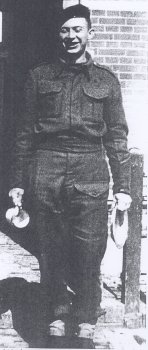
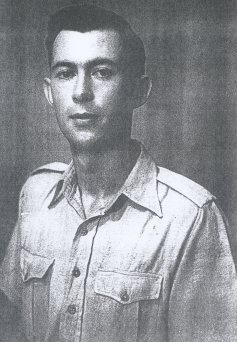
People in story: Stanley Ogilvie
Location of story: North Africa, Near East, Far East, Europe
Background to story: Royal Navy
Article ID: A2729676 ; A2729702 ; A2729775
Contributed on:
10 June 2004
Our memories can do many things, They can bring us joy or pain, Make us sad in lots of ways Then back to happiness again. Remind us of our early years And those that have passed since then. As life goes on we might complain While waiting for grey skies to clear. But it’s up to us to take the strain And overcome doubt and fear. We know that sunshine follows rain, That laughter can follow tears. Enjoy the years that yet remain Make these the Happy Years.
1. I was born in 1921, at 26 Cefnstylle Road in the south Wales village of Gowerton, about six
miles west of Swan sea, the only child of a Christian family. My Father, David James Ogilvie, then a farm bailiff, had been at one time a Sunday School Superintendent, and as I grew up taught me honesty and also the difference between right and wrong, while my Mother,
Annie, who had a quiet disposition, ensured that I observed these tenets, in respecting older folk and
in respecting other people’s property. Finances during my childhood were rather slender
although my Mother, being a good manager succeeded in ensuring that the family never went without essentials. My Father, being a keen gardener, grew all our own vegetables and in so
doing taught me the love of gardening. How on the onset of the first winter frosts to keep the potatoes earthed up. The varieties Sharpe’s Express, Epicure, Kerr’s Pink, King Edward
spring readily to my mind. At the bottom of the garden we had a small orchard with apple and pear trees, and also soft fruit bushes, and I well remember him growing rows of sweet peas and an abundance of scented roses. We kept a few chickens for their eggs and we also kept a pig which provided all the meat we required.
2. I have vivid memories of the victims of World War I, which had ended just a few years prior: the walking wounded trying to follow a suitable occupation, -no State Benefits in those
days -the amputees and victims of gas attacks and shell shock, reminders of the waste of human life caused by warfare. The 1914-1918 war supposedly was the war to end all wars; the war which would settle the nations differences once and for all; the war to which memorials for the fallen cover the whole country; the war which was to teach us the folly of war.
One of our teachers at Gowerton Junior School, Mr. Gilbert Sluman was a shell shocked victim and although a brilliant teacher was prone to be very easily upset when out would come the cane with which he commanded immediate attention.
It was because of this I grew up with the feeling of the avoidance against all forms of warfare, but at the same time of the necessity of eradicating all the causes that would eventually lead to warfare.
It was in this environment that I grew up, but I never became bored, there was so much to do. Having passed the “Scholarship” Examination, now the “Eleven Plus”, I received the obligatory bicycle, which enabled me to discover the beauties of the nearby Gower Peninsula, the first designated area of Outstanding Natural Beauty, and it was in September 1934 that I became a student at the Gowerton Intermediate County School, with its motto of
“Mi ddylwn, Mi allaf, Mi fynnaf’, which translates, “I ought, I can, I will”, this school many years later becoming the Gowerton Grammar School.
On leaving the Grammar School in June 1939, I was fortunate in gaining employment at 15s.0d. (75p) gross weekly in the general offices of the Elba Steelworks at Gowerton, and where my father was then employed, the works having been established in 1872.
3. Each of the surrounding villages of Gowerton had one or more coal mines, or a steelworks, a tinplate works, a foundry or some such heavy industry. On the 1st of September, 1939 when Poland was invaded by Germany under Chancellor Adolf Hitler’s command, Great
Britain and France mobilised their armed services. On the 3rd of September, at 11.15 a.m. Prime Minister Neville Chamberlain in a wireless broadcast, and in a most delightful
English voice, told us that as Germany had not replied to our ultimatum to withdraw their
forces from Poland, we as a nation were at war with Germany, telling us with these closing words:- Now, may God bless you all, may He defend the right. It is the evil things we shall be fighting against -brute force, bad faith, injustice, oppression and persecution and against them I am certain that the right will prevail. His words were then followed by the playing of
“God Save the King”. Neither of my parents had gone to Chapel that Sunday morning and we all sat in our kitchen listening to the broadcast. As it finished I could sense my mother
looking across at me not saying a word and I could tell the thoughts that were going through her mind. Two of her brothers had returned safely from World War I. On the 21 st of June,
1905 my father, who was then 22 years of age, had been working underground as a collier at the Elba Colliery near Gowerton when a violent explosion had occurred, killing eleven
colliers. He was badly burnt on his face and arms, had both his legs broken and he suffered from the inhalation of firedamp. Bums from coal gas are described as like no others. They seem to penetrate almost to the bone and even the slightly injured suffer an intensity of pain
which is impossible to describe. His 20 year old brother, Alexander, who was working by his side died from the effect of firedamp. Because of his injuries my father never served in the armed forces during World War I.
4. My paternal grandfather had been killed at Gowerton Steelworks ten years later on the 15th of July, 1915 aged 53 years, when a 2 ton metal ball from an electro magnetic crane rebounded and struck him, crushing him to death. Was I to be the third generation of the family to die a sudden and violent death? Only time would tell.
The first eight months of the war became known as the “Phoney War” in which an uneasy calm settled over Western Europe. This Phoney War ended on the 18th of April, 1940 when without warning Germany invaded Denmark and Norway.
On the 10th of May, the day Winston Churchill replaced Neville Chamberlain as Prime Minister, Hitler launched an offensive in the west. In the north his troops advanced into Holland, to the south his troops thrust through the wooded hilly country of the Ardennes. Outflanking the Maginot Line they swung north to trap huge numbers of French and British troops in northern France and Belgium, and by the 13th of May the Western Allies had already lost the Battle of France. On the 24th of May the entrapped British Expeditionary Force began to be evacuated from Dunkirk, the Royal Navy launching Operation “Dynamo” where between the 27th of May and the 4th of June, an armada of ‘little ships’ plucked 338,000 British and French troops from the beaches around Dunkirk, all the heavy equipment being abandoned in France. The popular press hailed the evacuation as a miracle, but as Winston Churchill pointed out, wars are not won by evacuations. He declared in the House of Commons that the Battle of Britain was about to begin and that Britain would continue to fight, albeit alone if necessary. On the 10th of June, 1940 Italy under the command of Dictator Benito Mussolini declared war on Great Britain and France. On the 10th of July the first phase of the Battle of Britain began as the Luftwaffe launched a series of probing attacks, seeking out the weaknesses of Fighter Command.
5. With the onset of war, Gowerton steelworks took its place, along with other such plants, in the production of armaments, and as such became a “wlnerable point” along with bridges, power- stations, depots, vital factories and the like which had to be guarded day and night against sabotage or enemy attack.
It had been in mid May, 1940 that Mr. Anthony Eden, onetime Foreign Secretary, had
proposed to the Cabinet his plan for raising Local Defence Volunteers and which met with
immediate response in all parts of the Country. On the suggestion of the Prime Minister the
name was changed to “Home Guard”. Gowerton raised two Companies of Home Guardsmen, seconded to the Welch Regiment, one to protect the village, the other formed from employees
to protect the steelworks. This was the Company that I joined at its inception. The steelworks was at the western end of the village which then leads out to the salt marshes of the tidal Burry Inlet in Carmarthen Bay. Our Commanding Officer, Captain Hubert Francis, together with the majority of the Senior NCO’s, were First World War veterans and imparted their military skills to us during lectures in the Village Hall and also when we took part in manoeuvres with and
against neighbouring Home Guard units. These were usually conducted at weekends as were our route marches. Our foot drill was conducted on the village sports fields. We had no
official transport, just our own bicycles. With the arrival of khaki uniforms and the issue of 0.303 calibre rifles we were emerging as a competent military force ready to respond to any orders in the event of an enemy invasion.
During August 1940, the corpses of about 40 German soldiers were washed up at scattered points along the coast between the Isle of Wight and Cornwall. This was a source of
widespread rumour that the Germans had attempted an invasion and had suffered very heavy losses either by drowning or being burnt in patches of sea which was covered in flaming oil.
6. In early September information showed that the westerly and southerly movements of barges and small ships to ports between Ostend and Le Harve was in progress, which added strength to these rumours. Operation “Sea Lion” was the name given to the German plan for the invasion of Britain and on the 7th of September the code name “Cromwell”, which meant that invasion was imminent, was issued, implying “Action Stations” for the forward coastal divisions, being repeated to all other Commands in the United Kingdom. The Home Guard were to be called out by the ringing of Church bells. On Tuesday the 17th of September, 1940 the Church bells of Bearninster, Dorset rang out early in the morning as a signal that an invasions had taken place. It proved to be a false alarm. The code word “Snipe” must have been given for this to have taken place. Such was the background against which the steelworks Company of the Home Guard carried out rosters of duty every evening using the First Aid building just inside the works entrance as a Guard Room. Having been promoted to the rank of Corporal, I was on duty on the night of Saturday the 28th of September, 1940 in charge of a party of Home Guardsmen. The night was fairly clear with quite a great deal of air activity, and with just a slight breeze with the moon due to set at about 3.00 a.m.
Hour after hour ticked quietly away, when suddenly I thought I could hear the bell of the village Church of St. John ringing. On going outside I was able to confirm that this was so, the signal that German troops were invading the Country was ringing out loud and clear. We had previously practised such an event on many occasions with each man knowing exactly what to do in such an emergency. All non essential lights throughout the works were immediately extinguished. I immediately called out the duty men, issuing each with his rifle and a bandolier of ammunition, and in the absence of a telephone, dispatching messengers into the village to ensure that our Commanding Officer and all other Senior NCO’s had heard the bell ringing out its message, and would report to his post.
7. Reports were corning back from the western side of the works that lights could be seen in the distance and that voices could be heard on the marshy ground of the inlet with it being
impossible to distinguish whether it was Welsh, English or German that was being spoken. Was any imminent attack to come from the seaward side of the works?
The lights which were visible seemed to be moving around which gave the impression that whoever was out there was floundering about in the mud.
The voices did not seem to be getting any louder but the lights continued to flash backwards and forwards which had the effect of keeping everyone on their toes.
When dawn broke after what had seemed to be a very, very long night, the figures could be
discerned. Figures of a duck shooting party who had become trapped by the incoming tide and were splashing about in it. The moving lights were caused by some distant fallen electricity wires sparking when they were being blown together in the wind.
But who had caused the Church bell to have been rung? We were never able to find out.
Several theories were discussed and discarded. Was it some prankster or was it all done in good faith?
In 1943 the code word for invasion was changed to “Bugbear”, and from the 27th of April of that year Church bells could be rung for Church services, but not for any other reason. Their ringing was no longer a signal for enemy air-borne or sea-borne invasion.
The steel works was closed in April, 1967 and by August, 1973 the whole site was cleared and subsequently became a leisure park which included outdoor football pitches and all weather
tennis courts, a housing development following in 1988. Later the village Medical Centre was built on virtually the same spot as where the Works First Aid building had once stood.
8. I left the Home Guard and also my employment at the steelworks early in July, 1941 when I received my “Calling Up” papers with the instructions to report to an address in Swansea to be medically examined. A recruiting sergeant who was present took one look at me and said, “You’re big enough for the Royal Marines”, so I “volunteered” for the Corps of Royal Marines reporting to Stonehouse Barracks, Plymouth on the 15th of July, 1941 and became a recruit, along with 46 others in 101 H.O. (Hostilities Only] Squad, with the Division and Register Number PLY/x 104129. My weekly payment was 17s.0d. [85 pence], of which 7s.0d. [35 pence] was forwarded by the Authorities to my Mother, my next of kin, to provide her with a War Pension should anything happen to me.
Outwardly, the Royal Marine Corps dresses similar to the British Army and receives much of its equipment from that source, at the same time it is part of the Royal Navy. Yet it has its own traditions, badges, folklore and ceremonial, the latter being a vital part of the custom and heritage of the Royal Marines. Our khaki great coats had a distinctive arrangement of buttons, in four pairs, with badges of rank displayed just above the sleeve cuff, reminiscent of the days when the Royal Marines in their dress uniform wore a shoulder cape, which would have hidden any badges if worn on the upper arm. It is true to say that we were clothed by the Army, fed and paid by the Royal Navy, and were subjected to Naval discipline. So that we would have some regard for the honour of the Royal Marine Corps, and to promote in us a feeling of ‘esprit de corps’ we received several sessions covering the foundation of the Corps. We were taught that the Duke of York and Albany’s Maritime Regiment of foot was raised in 1664 from the Trained Bands of the City of London, and were armed with the new-fangled flintlock musket, a weapon calculated to be more suitable on the wild, wet and windy sea than the usual matchlock musket.

9. This regiment, which was also known as The Lord Admiral’s Regiment, eventually became the Royal Marines -Britain’s sea soldiers -a Corps of soldiers, trained in amphibious
warfare, which was to provide the captains and admirals of the fleet with a capacity to project some force ashore, enable snipers to shoot enemy officers and gunners in close fought,
ship-to-ship engagements and -if the need arose, as it sometimes did, suppress mutiny among the sailors. The Marines were stationed amidships, to prevent mutiny, or as they used to say, ‘to stop the sailors and their officers eating each other’.
When the Great War ended in 1918, the Corps stood at 55,000 men, divided into two branches, the Royal Marine Artillery and the Royal Marine Light Infantry. Thisforce was swiftly reduced by demobilisation to around 15,000 men, and in 1923 the two arms were amalgamated into a single Corps, the Royal Marines. The functions of this Corps were then defined by the admiralty as ‘to provide detachments for HM Ships which, while capable of manning their share of the main armament, are also trained to provide a striking force for amphibious operations such as raids on the enemy coastline, or for the seizure and defence of bases for the use of our own fleet’.
The Royal Naval Prayer was also brought to our attention.
‘0 eternal Lord God, who alone spreadest out the heavens and rulest the raging sea, who hast compassed the waters with bounds until day and night come to an end, we beseech Thee to receive into thy Almighty and most gracious protection all those who go down to the sea in ships and occupy their’ business in great waters; preserve them both in body and soul, prosper their labours with good success, in all time of danger be their defence, and bring them to the haven where they would be’.
10.
Our recruit training had as its prime objective, the teaching of discipline by responding immediately to any word of command without question, and to achieve this we spent hours foot drilling under the watchful eye of our drill instructor on the Barrack Square.
We acquired a high degree of fitness by spending much time in the gymnasium and also in the swimming pool, and I began to feel that I could cope with service life, always bearing in mind the maxim, ‘If it moves, salute it; ifit doesn’t, then paint it’.
Our training then continued under canvas in Cornwall, being taught military skills, the handling of weapons, field craft and going on long route marches covering 30 miles in under the optimum 8 hours. It was during one of these long route marches that Marine William D. Howells, affectionately always known as ‘Ben’ and who came from Cilfrew in Neath, who was in the next rank to me, began to limp saying that one of his feet was hurting him terribly. To drop out on a route march was a sign of weakness, something we did not think about, so to help him I volunteered to carry his rifle as well as my own, exhorting him with the fact that it was only a few more miles back to camp. But still he limped, so Marine Glyn Griffiths from Llanelli who was in the other neighbouring rank volunteered to carry his back pack to make it easier for him. When we finally arrived at our camp, Ben flopped on to his bed, took offhis boot and sock and inside was the cause of all his suffering. A little rolled up ball of paper with the message on it, ‘May good luck go with the service man who wears these socks’, which had been inserted by the machinist who had knitted that pair of socks. Needless to say, Ben did not think much of the good wishes. Thereafter, Ben became my ‘oppo’, defined in Royal Marine jargon as a close friend. The ‘opposite number’ of a two man team, a system used to ensure maximum effectiveness in military activities.
11.On the completion of our military skills training we returned to Stonehouse Barracks to complete the naval side of our training. This comprised the learning of seamanship, semaphore, morse code, together with naval gunnery ranging from 0.22 rifles through to high angle anti-aircraft weapons and 15 inch naval guns.
On the 7th of December, 1940 we were told by one of our instructors that the Japanese in an aerial attack had practically annihilated the American fleet at Pearl Harbor in Hawaii. And so Japan entered the war on the side of the Axis with this event precipitating the entry of America into the Second World War on the side of the Allies.
All our intensive infantry and naval training culminated on the 20th of February, 1942 when as a squad and feeling super fit, we were passed for duty before General Sir W. W. Godfrey, K.C.B., C.M.G., Honorary Colonel Commandant, Plymouth Division.
Having declined a commission and a non-commissioned rank, I, together with others of our squad volunteered to join Combined Operations, being posted to Eastney Barracks, Portsmouth for further intensive training.
On the 19th of August the ill-fated onslaught on Dieppe known as Operation’ Jubilee’ took place. We were lined up on the parade ground and could distinctly hear the noise of the battle continuing in France, but we were not called upon to give support to the raid which culminated in some 1,000 dead. The bodies of two thirds of the Canadian troops and a fifth of the British Commandos littered the French beaches, a further 2,000 men being stranded and taken prisoner. A costly operation in which we took no part after waiting several long hours for the ‘Stand Down’.
12. A short while later we were sent north to Scotland for landing craft exercises on the troop
transport ships “Reina del Pacifico” and the “Monarch of Burmuda “, both pre-war luxury liners now commandeered for war service.
The training and exercises all had the same purpose, apart from the training as assault troops to fight alongside the landing parties, we were to form crews of light naval craft which supported landing operations during an invasion. This entailed dealing with the problems of approaching a hostile shore, landing upon it, or remaining off at close call and with the possibility of re- embarking troops from it.
The grand name Landing Craft Support [Medium], (LCS[M]) referred to our craft, 30 feet in length with an 8feet beam, shallow drafted and armour plated down to the water line. They
carried a crew of 12, consisting of a Royal Naval Officer, a coxswain, a signaller, a seaman, a
stoker and 7 Royal Marines each of whom, in addition to the usual kit carried a Thompson sub machine gun. The stoker sat aft between two Ford V8 engine which drove the twin propellers. The craft was fitted with a 4 inch mortar, which fired smoke or high explosive shells, a turret with twin Vickers 0.5 machine guns and smoke laying apparatus on the stem. In action the noise in the confined spaces was deafening.
All the training and exercises was soon put to good use, when with our craft swinging on the
port side leading davits, we sailed in convoy from Liverpool aboard the Orient Line Transport Ship “Otranto” on the 23rd of October, 1942.
13. Our destination was unknown to us but it was evident that as the weather got slowly Warmer we were heading in a southerly direction. On some days the bow of the ship pointed towards the setting sun, while on other days it was the stern that pointed in that direction indicating that the convoy was continuing its journey southwards in a series of loops. Little did we know when we sailed that up to that time our ship was part of the greatest arnlada in history and that shortly we would be taken part in Operation ‘Torch’.
Operation ‘Torch’ had been code-named by Winston Churchill himself and was the earliest example of a combined action by sea, land and air forces in which the Merchant Navy played a highly prominent part. It was the first time in the history of war that armies from two separate continents, Europe and the United States were simultaneously landed upon the shores of a third, the shores of French North Africa. It was during our journey south, and having been seconded to the 1st Army, we were told of our destination.
At the time we were being paid in Military Money, which comprised of notes of2s.6d [twelve and a half pence] and 1 s. Od [five pence] denominations with the intention that when we landed in North Africa all transactions by us would be in this military currency and not the French Franc. This paper money could also be used on board ship to buy necessities such as soap, cigarettes etc. at the NAAFI canteen.
I cannot recall that it was ever accepted by the civilian population, cigarettes being the favoured currency-
Regarding the purchasing power of a 1 s. Od., it is a remarkable fact that at that time it would purchase a glass of beer, a packet of Woodbine cigarettes and a box of matches and still leave a change of a halfpenny in the pre-decimal currency.
14. Having been aboard the ship for a few days, I decided it would be a good idea to have a bath. But where to find a bathroom as access to one was not easy. Some searching though, proved successful but it was only when I began to fill the bath that I realised that it was not fresh water but salt water that was pouring out of the taps, and as ordinary soap will not lather in salt water, I hurriedly dressed again, and hoping that no one would want to use the bathroom in the meantime, I decided to try out my military money by buying some salt water soap at the
canteen. Success, the bath was filled and I settled down in it. I had been there only a short
while, when the alarm bells rang throughout the vessel, summoning us to “Action Stations”. I jumped up, and without drying myself, half dressed and ran to my designated spot on board our craft, only to find after waiting around for quite a while that it was all a false alarm. Needless to say I did not return to the bathroom.
On Friday the 6th of November at 22.00 hours the convoy passed through the 13.6 kilometre wide Straits of Gibraltar and headed in a north easterly direction, hopefully giving the enemy the impression that a landing was to take place on the south coast of France. The following
day, our kit-bags were stored in the holds, we had a final briefing and rations for 24 hours were issued. At 22.15 hours we were at our stations. We were told that if the lights of the city of
Algiers were to be seen when moving in, the population would be expecting us, but if dark we would probably get a hot reception.
When opposite Algiers the convoy turned due south and so, on the 8th of November, Operation ‘Torch’ commenced with a large force of British and American troops, under the supreme
command of Lieutenant-General Dwight D. Eisenhower of the U.S. Army, landing along coast of French North Africa from Casablanca in the west to Algiers in the east.
15. Our particular objective was the beach at Sidi Ferruch, just west of Algiers. The noise of the engines of the assault craft had announced the advent of the invading force and we were
subjected to searchlights being turned on us, and to a not very effective fire of artillery and
machine guns. The enemy had been taken by surprise, but their underwater and air defences
proved strong, and Allied ships were lost, together with much military equipment and the lives of many service men.
On our run in to the beach we had a whole panoramic view of the coast line with the red-tiled, white washed buildings standing out so beautifully against the light of dawn. At the time I
thought that war was not so bad after all, little realising that war, like cream, turns sour within a very brief space of time.
On the morning of Monday the 9dt of November, at 10.00 hours an armistice was signed, and
so ended Operation ‘Torch’, but with operations continuing eastwards along the North African coast into Tunisia and Libya.
Since the winter of 1940-41, the war in North Africa had flowed backwards and forwards
along the Mediterranean coast line. To the south the desert yielded nothing, so campaigning resolved itself into a contest for the chain of small ports of supply along the coast. Cut off
from these, an Army was quickly deprived of water, fuel, ammunition, food and reinforcements in that order, which were the essentials of desert warfare.
By the 10dt of November, 1942, the invading forces had met up at Maison Blanche, the great airport to the south of Algiers, the French Army having shown little disposition to fight. On the instructions of Prime Minister Churchill the 1st of November was celebrated as
Victory Sunday. Church bells rang out for the first time in three years to celebrate the passing of the risk of invasion from across the Channel and also of the invasion of North Africa.
The road to victory was clearing.
16. Following our landing at Sidi Ferruch, we advanced on foot into the dock area of Algiers itself and were caught in a night-time enemy aircraft bombing raid by both high-level Italian bombers and German ‘Stuka’ dive bombers. On one of the jetties were large wicker baskets. We had no time to investigate as to what they contained but we, that is some of the patrol and myself, immediately utilised them as a shelter. During the bombing raid the wicker baskets became damaged by a very near miss and we all thought that we had been hurt and that we were covered in blood, but in the dawn light we could see that we were not, but were covered instead by hundreds and hundreds of snails. The baskets had contained ‘escargots’ destined for the tables of the Algerian city restaurants. Although we were all covered in a horrible slimy mess we all burst out laughing at the state we were in, but it could also have been possibly as a relief that yet again we had survived an enemy bombing raid.
In Algiers we were billeted in a ‘lycee’, a secondary school for girls while we waited for our next assignment, with daily leave from 2 p.m. to 4 p.m. which enabled us to explore the city. One of our party approached me with the request, that as I spoke French to buy him a bottle of hair shampoo from a chemist shop. This I did, but unfortunately instead of saying ‘Avez vous quel que chose pour laver les cheveux?’ -“Have you something to wash hair?”
I said ‘Avez vous quel que chose pour lavez les chevaux?’ which in English translates as, “Have you something to wash horses?”. No wonder the chemist paused but, nothing daunted, he produced a bottle of fluid which he assured me would do the necessary. That night we had the inevitable bombing raid, the school being damaged, with several naval ratings being killed and our breakfast ruined by fragments of broken glass landing in the porridge. Each of the classrooms had a lovely mosaic tiled floor on which we slept and the bottle of “shampoo” which had been placed on the floor ready for use the next day was smashed, and it was easy to see where the contents had flowed, the colour of the lovely tiles had disappeared.

24. On the 6th of October, we were ordered aboard the SS ‘Empire Farmer’ an American built Liberty Ship. She had discharged her cargo at Salerno, and not having taken on any ballast she rode very high in the water. She was to take us through the Straits of Messina to Malta, where we were to be drafted to the Shore Establishment, HMS ‘Phoenica’ at Floriana, and which is now one of Malta’s grandest and most prodigious hotels, ‘Le Meridian Phoenica’. There being no suitable fittings in the mess deck of our transport from which we could sling our hammocks, we were allocated bunks in which to sleep, and with real food to eat, this was sheer bliss.
During the night as we passed through the Straits, a violent storm blew up, the result being that we were tossed out of our bunks, across the mess deck to the sound of breaking crockery and glassware, together with the creaking of all doors as they swung to and fro. In the midst of all this, the ship’s siren began to sound, giving an unending series of long and short blasts. Being able to read the Morse Code we were able to decipher some words, the remainder being just gibberish. We all formed the opinion that the poor wireless operator must be out of practice, and at the least, should be sent on a refresher course. With such a storm raging no one volunteered to venture up on deck so we all decided to stay put. If we had to abandon ship, then we would wait for such an order. No such order came, and when dawn broke and with the sea almost mirror calm again, we went up on deck. Here we found the cause of the ‘Morse’. It was that the galley stack, which had been broken by the force of the gale, had fallen on to the wire connected to the ship’s siren, where it’s rocking to and fro had caused us so much alarm. In Malta, we suffered along with the Maltese people, the non stop bombing by German dive bombers by day and the high level bombing at night.
25. It was with a feeling of great relief, when on the 5th of November, we boarded HMS ‘Thruster’ a Parent Landing Craft Vessel, and a sister ship to HMS ‘Boxer’ and
HMS ‘Bruiser’ and sailed for the Far East, via the Suez Canal, the Red Sea and the Arabian Sea to the port of Bombay, being based at the Shore Establishment HMIS ‘Braganza ‘. Bombay in wartime was not usually a seaman’s first choice in ports and it was from here, at the end of January, 1944 we joined the SS ‘Jalapadma’ a converted cargo vessel of 3,935 tons owned by the Scindia Steam Navigation Company. All names of the vessels of this Line were prefixed with ‘Jala’. The ‘Jalapadma’ along with the port of Bombay, was destined to be part of WWll’s most horrifying disasters. After calls for victuals at Colombo in Ceylon, now [Sri Lanka] we sailed up the Bay of Bengal to Calcutta where we joined a unit fighting the Japanese in the North Western area of the Arakan region of Burma. In March 1944, British operations in the Arakan, which were almost entirely dependent on air support, were aimed at capturing the port of Akayab, thus strengthening the Allies logistical position for an offensive against the Japanese XV Army. This Army was commanded by General Mutaguchi, an experienced and ruthless warrior, who had expressed his intention of clearing every British and Indian soldier out of the Arakan to open up the way for the conquest of India. The area where the fighting for the port took place was extremely rugged and posed a variety of hazards -cobras, kraits, hamadryads, tigers, leopards, leeches and innumerable insects, some carrying potentially fatal diseases. Moreover, the Japanese thought that death in battle to be the highest honour. Having carried out countless raids and patrols against the
Japanese this was the predicament in which the remnants of the detachment found ourselves lacking sleep, short of ammunition, rations and water and very depleted in numbers due to disease and casualties, but not lacking in courage.
26. Orders were received to make our way overland on foot for about 150 miles back to Chittagong on the Karna-Juli river and to re-board the ‘Jalapadma’ prior to our sailing on the 25th of March, in convoy from Calcutta, bound for Bombay. Conditions on the mess deck allocated to us were not at all inviting, with the ship’s propeller shaft running directly through our quarters. The ships steering was of the chain and rod type, where the chains ran along the upper deck on the port and starboard sides and were then connected by rod to the rudder. This meant with every turn of the wheel by the helmsman, the chains rattled along the deck, the noise making rest almost impossible. With the noise and obnoxious smells coming from the interior of the ship, we sized up the situation, and as we were fully qualified naval gunners in addition to being infantry soldiers, we volunteered to man the ship’s armament, whereby we would spend the whole of the passage to Bombay in the open air. When dawn broke on the second day out from Calcutta there was no sign of any other ships of the convoy. The ‘Jalapadma’ was alone, having failed to keep up with the other ships during the night, and we now faced the passage around the coast of India without any protective escort. Sailing independently in these areas considerably increased the possibility of being mined, or torpedoed, or to suffer aerial attack, or of being shelled by surface raiders both German and Japanese.
27. It was in these waters that 10 Japanese submarines had sunk a total of eighteen vessels during January, 1942. The most successful had been 1-164, commanded by Lieutenant Tsunayasi Ogawa, who sank four vessels totalling 16,244 tons. Two were operated by the Scindia Company. On the 30th of January, the ‘Jalartarang’ of 2,498 gross registered tons was lost when bound from Cochin for Rangoon, thirty eight of her crew of 49 losing their lives. The following day the 4,215 ton ‘Jalaplaka’ was torpedoed taking thirteen of her crew down with her. Both vessels were shelled after the initial attack and sank some 100 miles east of Madras. To us, having served in the Teknaf and Arakan areas in Burma, we were prepared to take any further risks and we were now ordered to act as additional lookouts, especially at night, and to inform the Bridge if we heard the sound of surf breaking on the seashore, an indication that the ‘Jalapadma‘ was too near to the coastline and thereby enabling the helmsman to alter course a few degrees to port and steer clear of any danger. And so the ‘Jalapadma’ sailed southwards through the Bay of Bengal arriving at Colombo on the 6th of April, 1944. After taking on stores, cargo and victuals she continued her voyage northwards through the Arabian Sea to Bombay, arriving at No.1 berth, Victoria Dock on Friday the 14th of April, a pleasant Spring day, and tied up closely astern of the ‘Fort Stikine’ which had berthed there two days previously. From research it is found the ‘Fort Stikine’ a general cargo, coal burning vessel of 7,142 tons having been built in Canada under the Lease-Lend Agreement, had sailed in convoy from Victoria Basin in Liverpool on the 24th of February, bound first for Karachi and then Bombay.
28. The vessel was managed by the Port Line on behalf of the Ministry of War Transport. In wartime the general operation of cargo vessels was the owner’s responsibility; what they carried and where they went was up to the Ministry, but how they got there was the Captain’s answerability. Most masters and senior deck officers who sailed on British merchant ships during WWII would no doubt agree that there was a very fine line between making a right or wrong decision. All the deck and engine room officers of the ‘Fort Stikine’ were the Company’s men, whilst her Master, Captain A.J. Naismith had been with her since her maiden voyage. The morning of sailing was cold and murky with persistent drizzle with the vessel moving into the Mersey joining some 20 other ships which formed the Liverpool section of a convoy. During the course of the day the convoy was joined by others from Belfast and the Clyde, making a total of 50 plus vessels. The cargo of the ‘Fort Stikine‘ consisted of materials being despatched out East for the eventual assault on the Japanese forces in Burma and Malaya. RAF Spitfires and gliders, dismantled and crated, were in the holds and on deck, along with other service stores all for discharge at Karachi. The Bombay cargo, around and below the Karachi consignments, included just under 1,400 tons of high explosives -shells, torpedoes, mines, small arms ammunition, flares and incendiary bombs. Sitting in the ‘tween deck of No. 2 hold, immediately in front of the Bridge structure, was a welded steel tank containing, in small wooden boxes, 124 bars of gold each weighing 281bs, destined for a bank in Bombay to help stabilise the rupee. The value of this gold in 1944 was almost one million pounds. There would have been much criticism of both Mate and Master agreeing to load the vessel in such a manner, and also for sailing under those conditions.
29. Captain Naismith and his First mate were in no different a situation than many other deck officers of cargo ships between 1939 and 1945. It’s not possible to record the number of times that such disinclination would have been countered by the admonishment, ‘Don’t you know there’s a war on?’ For most of the eleven days to Gibraltar the weather was foggy with occasional heavy swells, but the sea was not persistently rough. Shortly before arriving in the Straits of Gibraltar, many of the vessels left the convoy, to form their own smaller one heading for West Africa, whilst a few hours later the original convoy was joined by another convoy from the United States. After passing through the Straits the re-formed convoy, on its second day in the Mediterranean was attacked by four Focke-Wolfe bombers flying low overhead machine gunning the vessels, but fortunately without damage, the ‘Fort Stikine ‘ and a handful of other vessels continuing on their way to the Suez Canal, taking on coal at Port Taufiq. She then sailed independently down the Red Sea, arriving at Aden of the 23rd of March where the Captain received further instructions to take a zig-zag course north eastwards across the Arabian Sea to avoid submarine attack, arriving in Karachi, without incident, on the afternoon of Thursday the 30th of March. The work of unloading the Karachi portion of the cargo commenced immediately day and night for 4 days. The aircraft in her cargo, most of the stores and some of the ammunition and explosives were unloaded, the void cargo spaces being filled with cargo for Bombay. Virtually all the high explosives loaded in Birkenhead remained on board and into the lower and ‘tween deck holds, particularly Nos. 2 and 4, above and below all the high explosives went some 8,700 bales of raw cotton, hundreds of drums of lubricating oil, timber, rice, resin, scrap iron, sulphur and fish manure. Neither the Captain nor the Chief
Officer were happy about this truly treacherous combustible mixture and made their feelings known but to no avail, they definitely refusing to accept an additional consignment of drums containing turpentine.
30. By the 9th of April loading had been completed and the ‘Fort Stikine’ left Karachi in a small convoy, mostly tankers coming from the Persian Gulf The sea journey to Bombay took two and a half days, the convoy arriving there in the early light of Wednesday the 12th of April and shortly before mid-day she moved into Victoria Dock, coming alongside at No.1 berth. Again, the work of discharging the cargo began almost at once, the intention being to unload the bales of cotton and the most sensitive of the high explosives into lighters and not on to the quayside. Unfortunately, no lighters arrived until the next day, but during the course of that afternoon and during the night, the drums of oil and the fish manure were unloaded. In addition to the explosives, the other very sensitive item of cargo was the gold, but it appears that the bank to which it was being consigned would only accept the 31 wooden boxes in which the bars were packed and not the single welded steel tank in which the wooden boxes were housed. There was no way that anyone was going to use a welding torch to open up this tank in No.2 hold whilst it was surrounded by explosives. So the gold remained where it was. At 1.30 p.m. the dock workers returned from lunch to the ‘Fort Stikine’. As they entered No.2 hold they saw smoke coming from the port side, nearest the quay. The stevedores scrambled up from the hold shouting ‘Fire’. At this point, there remained 6,000 cubic feet of timber on top of the bales of cotton. Above the timber, the upper part of No.2 hold was packed with explosives. Below the cotton lay a thick layer of ammunition. Although no completely satisfactory explanation was ever found as to why the fire occurred, sabotage was suspected but never proved. It all still remains a mystery.
31. The fire must have been smouldering deep down in the lower No.2 hold among the bales of cotton on the port side for quite some time, as wisps of smoke had been seen coming from one of the ventilators by No.2 hold as early as 12.45 p.m. but nothing had been reported. It was only on the shouts of ‘Fire’ did the crew become aware of what was developing. Men from a Bombay fire brigade pump on the quay promptly ran with their hoses to the ship. Not until their section leader was on board, however, did he remember that, for a ship carrying explosives his instructions were to send an immediate No.2 alarm, which would call out a larger force. With orders to dial 290, his sub-leader struggled back down the gangway, crowded with dock workers pushing to get ashore, and dashed to a telephone. But the telephone had no dial. Confused, he ran along the dockside, broke the glass of a fire alarm and rang the bell. Thus the fire brigade control-room received only a normal call for 2 pumps. The hands of the harbour clock tower stood at 2.16 p.m. The ‘Fort Stikine’ was a 400 feet floating bomb -a bomb with a lit fuse. Eight minutes after receiving the alarm the fire station officer arrived with 2 pumps. He sent an immediate No.2 call to the control-room. At 2.35 p.m. the chief of the Bombay fire brigade arrived, dressed in slacks and a jacket. He had had no time to change into uniform. Suggestions were made by him to scuttle the ship, but there were only four feet of water between her keel and the harbour bed. A distance so short that the water would not cover even the lower part of No.2 hold. Colonel J.R. Sadler, the general manager of the docks disagreed, he suggesting that the only safe action was to take the ship out to sea. The ship’s Master, being confused by conflicting advice, made no decision. The ‘Fort Stikine’ had at no time displayed a red flag indicating that she was carrying explosives, or was even now sounding warning blasts on her steam whistle.
32. For nearly an hour the firemen poured water into the burning vessel. At a quarter to four some of the explosives in No.2 hold caught alight, flames reaching above mast height when the Captain ordered everyone to get clear of the ship. At six minutes past four the ‘Fort Stikine’ exploded sideways, losing some of the blast in the water and quay-side sheds. All over Bombay buildings shook and windows were smashed. Debris and blazing cotton fell in a rain of fire over shed and ships. Of the firemen scrambling from the vessel sixty-six were killed outright, and eighty-three injured. The explosion played capricious tricks. White hot metal, flung haphazardly into Bombay picked out victims at random. The Captain and Chief Officer were with a marine surveyor, Mr. C.W. Stevens on the quayside close to the stem when the explosion occurred. Mr. Stevens was flung for several yards along the quayside by the blast, although injured he survived. After the blast had swept over him he stood up to find himself blackened and naked. Nobody saw the Captain and Chief Officer again. No trace was found of them or of the ship’s cook. Miraculously the remainder of the ship’s crew were all accounted for. For some inexplicable reason, following the explosion, the after portion of the ‘Fort Stikine’ remained intact and still afloat, the fire raging through the hull and burning debris falling into the open No.4 hold, which held 748 tons of explosives including many incendiary bombs. This was a much greater quantity than had already exploded in No.2 hold, and at 4.40 p.m. from the red glow inside the pall of smoke that hid the ship, there came a second roar and an explosion far greater than the first. Whereas the first explosion has burst sideways, the second bore straight up, flinging flaming metal, timber and cotton to a height of 3,000 feet. At the top of the trajectory the mass mushroomed and fell over an area of more than a mile across.

33. The effect of this on hundreds of godowns and crowded huts of the poorer Indians living near the dock area can well be imagined, as the shock waves even registered on the seismograph at the meteorological station at Simla, one thousand miles away. The exact number of casualties was never known. Large numbers were taken to St. George’s Hospital. After the injured came the dead. By the Sunday morning the hospital mortuary was packed to the ceiling with casualties. Hundred of bodies were never recovered.
When the ‘Fort Stikine’ had first exploded at 4.06 p.m. it caused such a tidal wave within the dock that the ‘Jalapadma’ was lifted bodily from the water and turned at right angles, with her stem coming down across the quay and one of the dockside sheds. It had been only minutes earlier that we had disembarked from her and were only a very short distance away from the ‘Fort Stikine’. Our survival I attribute to the fact that when the first explosion tore the ship apart, although we were not too far away, we were sheltered by the huge sheds which
absorbed the main impact of the blast. We were well experienced in dealing with explosions but nothing quite like this. We immediately returned to render such assistance as we could, helping the wounded by placing them between any two intact walls where they would be relatively safe from the continual bursts of exploding ammunition. We also assisted in the work of rescue, salvage and fighting the fires in the blazing warehouses and we helped in the moving of ships, some of which contained explosives, from the dock into the open sea. The explosions that day caused a total loss of 34,639 tons of shipping, all 27 ships in the docks were sunk, burnt out or badly damaged beyond repair. All the dock buildings were gaunt heaps of rubble, it taking three days to fully extinguish all the fires. Over the next six months a million tons of debris were moved to get the harbour working again.
34. Out of this grim tragedy came one amusing tale. Nearly a mile from the docks,
D. C. Motliwala, a retired Indian civil engineer, whose flat had been damaged by the flying
debris, was sitting on his third floor veranda. In a comer of the veranda, almost covered with rubble, he saw what appeared to be a lump of metal. On picking it up, he found that it
measured I5ins. x one and a half inches, weighed 28 lbs. and was one of the bars of gold from the welded tank in No.2 hold. For his honesty in returning it to the Authorities he received a reward of 999 rupees. It was the only one of the 124 bars ever recovered.
Part of a communiqué issued by the Bombay Government on the evening of Friday, the 14th of April, 1944, read’ At about 4.00 p.m. today an accidental fire broke out on a ship in the docks and before it could be brought under control, it spread to some ammunition and caused two violent explosions. A number of casualties have unfortunately occurred and the injured are
being attended to in the hospitals.’ These words cloaked one of the major accidental disasters of the Second World War.
Eventually after some days, we were relieved and taken by truck once again to
HMIS ‘Braganza’ where we received counselling during the following days. This consisted of being awakened at 4.00 a.m. by the Bugler sounding Reveille, assembling on the Parade
Ground in full kit and with buttons highly polished at 5.00 a.m., and being subjected to foot drill for the next few hours under the command of a Petty Officer of the Royal Indian Navy, until, as can be imaged, the perspiration ran down our backs in torrents.
This form of counselling, I imagine, took the form of replacing in the mind, one horrible situation with another scene equally as horrendous or even worse.
35. On the 6th of June, 1944 while we were at HMIS ‘Braganza’ we heard over the radio of the
launching of Operation ‘Overlord’ -the landing of Allied troops on the beaches of Normandy. D-Day had arrived, another ‘Der Tag’.
By the 12th of June the Allies after a tremendous struggle held a beach-head 42 miles long.
Nurse Iris Ogilvie [no relation] of Unit No. 50 of the RAF Mobile Field Hospital was one of the first women to land on the Nomlandy beaches after D-Day.
As we had been stationed in India at the time of Operation ‘Overlord’ and had not taken part in it, we were later dubbed as the D-Day Dodgers, to which insult some unknown Forces’
humorist wrote a poem, sung to the tune of ‘Lilli Marlene “ of which I will quote only the last
verse:-
Look around the hillsides, Through the mist and rain, See the scattered crosses, Some that bear no name.
Heartbreak and toil and suffering gone, The lads beneath, they slumber on, They are the D-Day Dodgers, Who’ll stay in Italy.
The Allied drive into Europe continued and by September the Allied Forces were fighting on Reich Territory.
All the rumours about our being drafted to the Andaman Islands in the Bay of Bengal, to continue the fight against the Japanese came to nought when on the 2nd of October we left
India on the Troopship HMT ‘Strathnaver’, a peace time luxury liner, built in the shipyards of Vickers Armstrongs Limited at Barrow-in-Furness and now converted to a troop ship. As we left I made a vow, which I have kept to this day, that never again would I eat a curried meal.
36. When we went aboard we were delighted to learn that we were not being allotted any
watch-keeping duties. This would mean uninterrupted sleep at night and would make a great change for us, as invariably when boarding any sea-going vessel we were always called upon for watch-keeping duties. The 24 hours of the day were divided into 5 watches of four hours each, starting, say, with the First Watch, 8.00 p.m. to midnight; then the Middle Watch, midnight to 4.00 a.m.; then the Morning Watch, 4.00 a.m. to 8.00 a.m.; the Forenoon Watch, 8.00 a.m. to noon; the Afternoon Watch, midday to 4.00 p.m.; followed by the Dog Watches of2 hours each, the First Dog Watch 4.00 p.m. to 6.00 p.m.; the Second Dog Watch,
6.00 p.m. to 8.00 p.m., the latter two enabling a rotation of the watches. I understand that these two watches were called Dog Watches because they were curtailed watches.
Of all the watches, I preferred keeping the Morning Watch as when on watch I must have seen the sun rising above the horizon on the hundreds of occasions, a red ball of fire, at the start of yet another day.
On the ‘Strathnaver’ we took advantage of slinging our hammocks on the upper deck and we slept in them every night until arriving at Gibraltar, where with the weather becoming a little colder, we retired gracefully to one of the suites below, enjoying a life of ease and luxury. When sleeping on deck we were awakened each morning by members of the Lascar crew, a very happy lot, washing the decks, -wartime or not, the peacetime routine continued for them.
37. We arrived at Liverpool on the 23rd and after disembarkation leave I was posted to the Shore Establishment HMS ‘Robertson’ at Sandwich in Kent.
Two months later in December, 1944 the German Forces counter -attacked in the Ardennes, in the so called Battle of the Bulge, and we were assigned to 902 LCS[M] Flotilla of Landing Craft. We left Tilbury bound for Antwerp in Belgium, the ship having difficulty in docking because of the thickness and volume of ice in the harbour. Antwerp lies on the River ScheIdt, 88 kilometres from the sea, the river pouring out into a vast estuary which is divided into two parts, -the East and the West ScheIdt -by a long peninsula, South Beveland, and the two islands, North Beveland and Walcheren. We were based initially at Wolphaartsdijk and then at Wemeldinge, both on the island of South Beveland, being given the task of night time patrolling the ScheIdt in our craft and being ordered to keep a vigilant lookout for any attack on the buildings on the shore banks by German explosive filled motor boats.
These operated in a “V” formation of five or seven boats, one of which contained no explosives, but instead carried the radio operator, usually one of Hitler’s Youth Army, who controlled the other craft in their progress towards any opportune target. Our task was to identify and “take out” this particular craft and in so doing abort the attack. But the problem in the half-light was always to correctly identify the operator’s craft, as with each attack his craft’s position in the “V” altered. Sometimes we won, sometimes we lost.
In addition to our night time patrolling in our craft, we also formed a 24 hour guard on the lock gates at Wemeldinge which controlled the northern end of the canal through South Beveland. Any destruction by the Germans of this important waterway between the East and West ScheIdt would have meant a major setback to the Allies in winning WWll.
38. In April 1945 we returned from Holland to the United Kingdom, being drafted once again to
HMS ‘Robertson ‘.
World events at this time were moving very quickly. In that same month Franklin Delano Roosevelt died, with Harry S. Truman inheriting the Presidency of the United States; the Russian and American Forces linked up in Germany; Benito Mussolini, the Italian leader was killed by Italian partisans; the German Army in Italy surrendered and Adolf Hitler, the German leader, committed suicide. In the following month German Forces in North West Germany, Holland and Denmark surrendered and on the 8th of May the war in Europe ended. VE Day [Victory in Europe] being celebrated on the same day. In July with the populace of the United Kingdom wanting a change of Government, the Labour Party won the General Election, with Clement Richard Attlee becoming the Prime Minister.
Air attacks on Japan continued, and on the 6th of August an atomic bomb destroyed Hiroshima, with Nagasaki suffering a similar fate 3 days later. On the 14th of August Japan surrendered unconditionally with VJ Day [Victory in Japan] being celebrated the following day. So ended World War Two at last.
It had been at a tremendous cost, with an enormous loss of life and a great deal of suffering to
many throughout the world.
It had been in June, 1945 that while home on leave I had become ill with a recurring attack of malaria. I was sent, firstly to Morriston Hospital in Swansea, which had just been constructed and then to an auxiliary Military Hospital at Boncath in Pembrokeshire.
39. It was while I was at Boncath that I became friendly with my future wife, Mabel Irene Thomas, whose hometown was Barrow-in-Furness. Mabel’s father and also her maternal grandfather were originally from Neyland in Pembrokeshire, both having left there while in their teens due to lack of work, to gain employment in the ship building yards of Vickers Armstrongs Limited. Mabel was a member in the horticultural section of the Women’s Land Army and was based at Pentre Mansion, the estate being owned by the Saunders-Davies family. The mansion had been commandeered by the Military Authorities to be used as an Auxiliary Hospital and Convalescent Home for sick and wounded personnel. One half of the mansion was occupied by the family and their staff, and the other half by the Military.
The mansion was a beautiful place, with its glittering chandeliers hanging from the ceilings, old paintings of the family ancestors together with framed photographs of the present day family hung on the walls. Each of the rooms had colourful names, and on the landings stood suits of armour worn by the family ancestors during previous wars. We were dressed in vivid light blue suits, white shirts and red ties, and were cared for by VAD [Voluntary Aid Detachment] nurses under the command of a matron, while our discipline was taken care of by an Army Sergeant Major, with an Army Medical Officer attending every two weeks to carry out medical examinations. We were very careful in arranging to be on a week end pass on each occasion of his visits, thereby ensuring a further two weeks stay at the mansion. I made a point of always passing through one of the conservatories each morning on the way to carry out my ablutions at the same time as Mabel would be watering all the plants, and so our interest in one another increased with each day. We, as patients were not allowed to go into the gardens but were allowed to walk in the grounds at the front of the mansion. Mabel and I spent our evenings together walking along the neighbouring country lanes and in so doing our acquaintanceship
deepened.
40. Life was progressing blissfully, until one Friday evening, as we lined up outside Matron’s room for our usual passes, disaster struck. There was no answer to our persistent knocking on her door, and we were told by a passing nurse that Matron was away on leave. What were we to do? The Medical Officer would be along in the morning and we would all be available for him to carry out his medical examinations. We eventually decided that fate was against us and that there was nothing we could do, our little scam had come to an end.
Tomorrow arrived and so did the Medical Officer. He took one look at the majority of us, and without any hesitation, stamped our notes with the dreaded letters, RTU [Return to Unit], an event that we had spent so much time in carefully avoiding.
So I was discharged from the Hospital on the 11th of August, and with a heavy heart, was taken, with the others, to catch the train at the local railway station by the chauffeur in the family limousine, I having been posted to HMS ‘Wolverstone’, a Shore Establishment, again in Kent.
Unfortunately, Mabel and I could only meet very infrequently after that, only when I had weekend leave or sick leave, and it was at this point that we became engaged to be married.
In May, 1946 I was drafted to the Royal Marine Barracks at Plymouth prior to my being medically discharged from the Corps, suffering from malaria, [sustained in Burma], gun shot wounds to my head, neck and right shoulder [which I had sustained in Djijelli in Algeria in April 1943], cervical spondilosis, bilateral noise induced sensorinaural hearing loss, headaches and tinnitus. Of all the time that I served in the Royal Marine Corps, I spent about 50% of it afloat, the remainder on land, whereby I believe I upheld the motto of the Corps, PER MARE, PER TERRAM -BY SEA, BY LAND.
41. I kept in touch with my ‘oppo’ Ben and also with Marine Glyn Griffiths for many years until their demise, but the other members of our initial squad I never saw again.
I was fitted out with a demob suit and a mackintosh, shirts, socks and a pair of shoes all neatly done up in a brown paper parcel tied with string.
I received a single journey railway voucher to Swansea, and the sum of £67 .19s. Od. [£67.95] composed of a War Gratuity of £28.0s.0d., which was in respect of 56 months service at
10s.0d. [50 pence] per month and Post War Credits and Pay of £39. 19s.0d [£39.95] being 1598 days at 6 old pence per day.
Along with my Campaign Medals I received a letter from the Minister of Pensions stating that he had been commanded by His Majesty the King to forward to me the King’s Badge, which was a silver lapel badge with the Royal Cypher surmounted with the words, For Loyal Service, and which was issued to members of the Armed Forces who were disabled as a result of war service.
It took me some time to settle down in civilian life. I had changed and no longer spoke the same language as previously. It was now interspersed with Arabic phrases, together with some 9fFrench, Italian. German and Dutch. Life now seemed rather slow, as we had lived on a knife edge for so long, seen dreadful sights, and lost many good friends, but with patience I soon got the hang of it again.
Mabel was granted a willing release from the Land Army on the 7th of January, 1947, and was given a single journey rail voucher to Barrow-in-Furness, returning to her home, which by then had been repaired and had become habitable once again after having been damaged in May 1941 during German air raids on the town.